Wednesday, June 11, 2008

CARE PRESS RELEASE: Sweating a way to a better world

Work out on the Mall in solidarity with marginalized women and girls. Every hour you exercise, Eric Harr will donate $5 to CARE

Contacts: Rick Perera, 404-457-4649 / rperera@care.org or Allen Clinton, CARE, 404-457-4635 / clinton@care.org

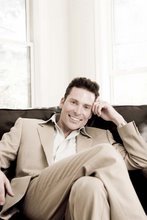
WASHINGTON, D.C. (June 11, 2008) – Professional triathlete and fitness author Eric Harr says getting in shape can be the easiest way to help fight global poverty.

Harr is leading a 7 a.m. workout session, to express support for marginalized women and girls worldwide, on the Mall on June 18. He’s also sponsoring the I Am Powerful Workout, through which Harr donates $5 to the poverty-fighting organization CARE for every hour each participant exercises.

All you have to do is sign up at www.care.org/workout and log your hours via e-mail. Work out five hours this week and you will have automatically raised $25, towards the goal of $1 million in support for CARE from Harr.

Members of the public are invited to join CARE supporters from across the U.S. for Thursday’s workout. All participants will be entered in a drawing for prizes -- two winners will get 12 months of personal fitness coaching by Harr. And he’s keeping his own personal pledge by training for the Ironman Triathlon World Championships, to be held October 11, 2008.

Harr was inspired to launch the I Am Powerful Workout when he traveled to Mozambique with CARE to visit health and nutrition programs, meeting women who are struggling against huge obstacles to pull themselves and their communities out of poverty.

“Here in the US, we are facing an unprecedented health crisis in the form of obesity and physical inactivity,” he says. “At the same time women in the developing world lack access to basic services to improve the health of their families. This workout addresses both of these issues in a very special and emotional way.”

The Warm Up

On June 18th and 19th, Harr will join other supporters from across the country at CARE’s National Conference in an effort to engage policymakers in the fight against global poverty. Harr kicks off the conference with the Thursday morning workout – encouraging participants to log their hours in support of CARE.

About CARE

CARE fights global poverty by empowering marginalized women and girls to bring lasting change to their communities. Visit www.care.org for more information.

Wednesday, February 27, 2008

What It Means to Care

I HAVE ALWAYS THOUGHT OF MYSELF AS a compassionate and charitable person. I was raised in a sheltered, upper-class environment in Marin County, California, but my parents instilled an unshakable sense of social justice in me. From an early age, I felt compelled to give a voice to those without one: whether it was a stray animal or a homeless person.

Recently, I discovered a deeper, more authentic meaning of the word “care.”

I
spent eight days touring remote communities in Mozambique with CARE, to observe their work and to meet the people who benefit from it.

Now, it’s one thing to hear about the state of affairs in places like Africa and to care about what’s going on. It’s another thing altogether to sit with these people and to look into their eyes when they talk about their dreams of a better life for themselves and their children. I can never again ignore this problem or be glib about how profoundly and viscerally poverty affects people. I now know what it truly means to care.

With that, CARE and I created the I Am Powerful Workout, which couples the issues of personal health and worldwide poverty in a most unique and uplifting way.

This campaign helps each of us elevate our own health (in a time when we really need it!) as we elevate marginalized women and girls around the world (in a time when they really need it!). What makes the I am Powerful Workout so powerful is the unique nature and win-win dynamic of the gift. In “gifting” yourself with better health, you are gifting others with a better life. Literally, every step you take to get into better shape is a step on behalf of marginalized women and girls worldwide. When you finish a workout, you feel stronger literally. And, knowing you did something for people a world away is empowering, too. Look good, feel good … do good!

Those women I met in Africa have awe-inspiring strength, power and courage to endure every day against impossible odds. I am hoping to empower them by competing in professional triathlons to support CARE; I know they are empowering me. Whenever I am unmotivated to work out or exhausted by the pain of an Ironman, I think of what these women endure each day. I gather myself up, I take a deep breath, I shake off the doubt and I forge on in their honor.

Please log on to www.care.org/workout and join me today.

And, feel deep in your heart what it really means to care – for yourself and for others.

Thursday, February 14, 2008

Super motivation from superstar athletes

THERE ARE PLENTY OF FACTORS motivating athletes to be fit, from the glitz and glamour of victory to the cold, hard cash. But what keeps them on track is surprisingly simple – and it can work for you, too.
Dazzling athletic feats—from a quadruple toe loop in ice skating to a world-record marathon—inspire awe on two levels: first, by what top-echelon athletes can do with their bodies, and second by how they stay motivated to stick with a glitch-free diet and training regimen for years on end. Champion athletes indeed have the time, money and support they need to achieve their goals, but beneath it all, they are regular people who often face the same motivational ebbs and flows that we all do. “Top athletes may seem like a distinct species from the rest of us, but they also represent what’s possible in each of us,” says Jay Kimiecik, Ph.D., author of The Intrinsic Exerciser (Houghton-Mifflin, 2002). “They set lofty goals, then they push themselves, trying and testing every tool, technique and method to stay motivated.” While you may not aspire to “land a quad” or run a 5-minute mile, you can apply the hard-earned lessons of seasoned athletes to boost your own diet and exercise programs. Here, our panel of top trainers, psychologists and the athletes themselves offer stick-with-it tips to which all real women can relate.

TIP: Invest in
yourself first each day
We are a product of our daily habits. The choices we make each day determine how we look, feel and live. Unfortunately, as work, family and social engagements fill our schedules, our diet and exercise can be pushed to the periphery. That’s why it’s important to tend to your body and mind first thing each day, no matter how small the investment. “My health comes first every morning,” says Marla Streb, world-championship medallist mountain biker. “It’s the little things. For example, I’ll never check email before I go for my ‘power-hike’ with my dog.”

EXERCISE: Over the next 30 days, put your health at, or near, the top of your daily to-do list. On the worksheet below, write down five things you can do first thing each morning to boost your body, whether it’s taking a 45-minute run, doing deep breathing exercises or drinking a glass of warm herbal tea. Develop the habit of “treating yourself first” each day and you’ll look better, feel better and live better.

TIP: Get your zzz’s
My mom’s advice is the guiding maxim of every successful athlete: to be your best, you need your sleep. Research shows that when you aren’t well-rested, you cannot perform at your peak in daily life—and you’ll feel too weary to work out. World-record pole-vaulter, Stacy Dragila never compromises on sleep, no matter how busy she is. “Even if I’m traveling to a race halfway around the world, I’ll get in my 8 hours,” she says. “It’s a key to my competitive success.” Julie Moss, the Ironwoman triathlete who crawled to the finish line on ABC in 1982, agrees that sleep is non-negotiable. “I don’t care what kind of day I have, when 10pm rolls around, I’m out. That has helped me retain my edge for over 20 years.”

EXERCISE: Use the worksheet below to map out a better sleep schedule for yourself. Also, jot a few ideas on how you can increase the quality of your sleep environment (Do you need a more comfortable mattress? More soothing lighting?). Finally, take refreshing daily pauses as often as possible. Half-hour naps are sublime on weekends. During the work-week, aim for 10-minute breaks in which you go outside, close your eyes, breathe deeply and clear your mind. These midday pauses provide powerful rejuvenation by taking your foot off the accelerator, so to speak.

TIP: Think long-term
When we watch an athlete achieve an amazing feat, we tend to think it occurred out of the blue. But, those achievements represent thousands of hours of work. Britain’s Paula Radcliffe is the current marathon world-record holder. Andy Jones, M.D., a physiologist at Manchester Metropolitan University, has monitored every aspect of Paula’s physical condition for over a decade. “She has been at this for years. The interesting thing is that to the outside world it looks like there's been this dramatic breakthrough, but really it's been an incremental progression over the last 13 years,” he says.

EXERCISE: View eating well and exercising as a lifelong pursuit. You needn’t accomplish all of your goals right here, right now. Accept the highs and the lows as part of the total journey and keep moving forward. Strive to improve your diet and fitness day-to-day but track your progress month-to-month; that takes the pressure off. Write down your monthly goals on the worksheet below.

TIP: Get (a little) competitive
Every champion athlete is fueled by a fierce competitive fire. While you needn’t “conquer” others in a sports arena to get motivated, you can benefit greatly from healthy competition. “Spurring yourself to greater heights by being moderately competitive can be a powerful way to keep your motivation up,” says Jim Taylor, Ph.D, a sports psychologist from San Francisco, Calif.Prime Sports (Writers Club, 2000).

EXERCISE:
and author of Using the worksheet, write down a few ideas on how you can push yourself to greater heights. If you prefer to test yourself, then enter an organized athletic event or challenge yourself to create healthier, more delicious meals. If you thrive on competing with others, then challenge someone to a friendly weight-loss competition.

TIP: Follow your heart
It’s motivating to know that you’re getting the most bang for your workout buck. One of the ways top athletes maximize the benefits of physical activity is by monitoring their heart rates. “Regardless of your fitness level or goals, to reap the greatest results, you must exercise at the right intensity,” says Sally Edwards, author of several heart rate books including the best-selling The Heart Rate Monitor Book. “The best way to measure exercise intensity is to monitor your heart rate continuously by using a heart monitor. In fact, this little device may be the most important investment you’ll ever make in your fitness.”

EXERCISE: Use the worksheet on page TK to calculate your ideal exercise zones and then log onto www.polarusa.com and learn more about how to use a heart rate monitor to achieve your goals.

[WORKSHEET]

HED: SUPERSTAR SUCCESS SECRET WORKSHEET

Make a copy of this worksheet, fill it out and post it in a highly-visible place that will keep your fitness and diet commitments front-and-center over the next few months.

Pay Yourself First

What five things can you do first thing in the morning to boost your health and nutrition?

Get Plenty of Rest

Map out a sleep schedule (and stick to it) over the next 30 days.

Think Long-Term

Write down your diet and fitness goals for the next six months.

Get Competitive

Write down three ideas to put some healthy competition into your diet and exercise lives

Get More from Your Workouts

In order to train “in the zone,” and get the most benefit from your workouts, you need to know your maximum heart rate, which can be approximated by subtracting your age from 220. Write that number here:

Maximum Heart Rate _________

You will use this number as the basis for your workouts. If you are striving to burn fat, boost your health and get “fit without fatigue,” then you should exercise at 60 to 80 percent of your maximum heart rate (MHR). So if your MHR is, say, 180 beats per minute, your heart rate during a fat-burning workout should be between 108 and 144 beats per minute (180 x 0.6 = 108 and 180 x 0.8 = 144.)

Fat-burning/Health-Promoting Zone:

When your fitness begins to plateau (see September issue), it may be time to insert some intervals of 30-seconds to two minutes—at 80 to 90 percent of your MHR—into your workouts.

Fitness Boosting (“Plateau Busting”) Zone:

Monday, January 14, 2008

Kiss Boomeritis Goodbye

On October 15, 2007, with a few unremarkable keystrokes, Kathleen Casey-Kirschling took one small step for a woman and one giant leap for a generation.

Ms. Casey-Kirschling, who is widely considered to be the nation’s first Baby Boomer, became the first Boomer to file for Social Security retirement benefits.

What does this have to do with fitness, you ask? A lot, actually. It means that the Boomers are getting older. And, that means that in order to make the next phase of their lives as healthy and fulfilling as possible, they must do things a little differently when it comes to physical activity.

Does this mean that I’m going to recommend that you pick up a copy of Richard Simmons’s - Sit Tight: A “Sittin' Down” Workout?” “Now as you sit there, lift your can of lima beans up to the sky. Good. Good for yooou!”

No. I’m not going to do that, because the Boomers are marching into older age in far better physical shape than their parents.

First, let’s get clear on what “older” is and is not.

“Older” is a fact of life. Time passes, we age, and our bodies change. However, “older” is also an arbitrary designation based on an arbitrary number. Granted, sixty years ago, “older” meant “old,” because old people looked and acted…well…old. In 2007, that word has been rendered all but meaningless. Eighty-year olds are surfing and playing tennis and bungee jumping and running (not jogging) marathons. And, they’re completing the Hawaii Ironman Triathlon in 16 hours.

Here’s what “older” is not: It’s not a valid reason to avoid getting into stellar shape. It’s not an excuse to slow down, make concessions, do less -- and go gently into that good night.

Baby Boomers comprise the largest segment of the American population at roughly 80 million strong. But a recent study indicates that while Boomers may be strong in numbers, they’re not so strong in body. Injuries among Boomers -- torn ligaments, stress fractures and knee problems – are at an all time high. “Boomeritis,” as health professionals call it, cost an estimated $22.8 billion in 2003. That’s the bad news. Here’s the good: It’s easier than you think to get into great shape, and the scientifically-verified benefits of physical activity include: a better heart, a better mind, a better body and a better life.

We often forget how good it feels to have a fit and radiant body. We learn to accept less. If that sounds like you, stop that. Start demanding more, and you will experience the joy and passion of what it feels like to be fully alive. It all starts with moving your body.

Motivation Follows Movement

This may sound like more self-help ballyhooing, but it’s true: the motivation to exercise does not spontaneously occur. In fact, the less you exercise, the less you’ll want to exercise. You simply must start moving to get motivated to move. If you are out of shape, as little as three 20-minute workouts a week can have huge, positive effects on your physical and mental health.

Sometimes the notion of getting into shape after a long layoff can be so daunting that it discourages people from even starting out. Those people operate under the false assumption that it takes a series of one-hour leg-pumpin’, heart-thumpin’ spin classes to get back into shape. Here’s the trick: First, consult your physician and make sure your body is ready for a new exercise program. Then, when you start back to exercising, don’t focus on any numbers: no “workout time,” no “calories burned,” no “repetitions,” no “heart rate zones.” Just be smart, listen to your body and have fun with it. If, on your first day out there, you complete a five-minute walk, that is a terrific start. Once you generate a little momentum, it’s a difficult force to stop.

Bear the Burden

As Boomers age, it is estimated that half of women over age 50 will suffer a bone fracture caused by weakened bones, while one in eight men will suffer the same fate. While it’s important to take care of your joints and never overdo it, avoiding weight-bearing exercise, such as brisk walking, climbing stairs, resistance training, etc., can actually increase the risk of osteoporosis. Light jogging, if your knees can handle it, is a terrific activity for Boomers. Strength training is a must as well, since you can lose up to a half-pound of muscle tissue every year after age 35. Strive to incorporate some form of strength training and weight-bearing activity into your routine at least twice a week.

Your Body is Keeping Score

“You are more likely to be killed by your couch than by a stroke or an accident,” says Jim Taylor, Ph.D, author of The Prime Sport book series.

“There are 35 diseases, collectively known as Sedentary Death Syndrome (SeDS), associated with a sedentary lifestyle,” says Dr. Taylor. “Each year, about 250,000 Americans die from them. Since only 28 percent of Americans exercise regularly, an estimated 60 percent of the population is thought to be at risk for SeDS.”

It’s important to understand that your body is keeping score, right this moment, and every moment. Ignore your exercise, and somewhere down the road your body will demand payment…with interest.

Most of us require some form of tragedy to make a positive change. We’re comfortable with the status quo. We wait until something goes wrong until we decide fix it. The U.S. medical model works this way; it depends on the appearance of symptoms to prompt action. This is no way to live. Take action now and pursue a simple exercise program, and you can be healthy and strong all the way to the finish line. Investing in your body is arguably the best investment you’ll ever make.

Mix it Up

Who says you have to run on a treadmill to get into shape? Not me, that’s for sure. Set me loose on the trails, and I can scamper happily over hill and dale for three hours. Put me on a treadmill, and I start weeping after 11 minutes. Find your “fitness bliss,” and the calories burned will be a natural consequence of the fun, rather than the focus of the activity. That’s when it becomes easier, and more rewarding, to get into shape.

Boomers, some say you have the best years ahead of you. If you commit to staying in shape, and taking care of your body, I believe the years ahead of you can be your best ones.

Go for it.

Tuesday, January 1, 2008

Motivated by Forces Larger Than Myself

Hey, everyone! Well, after several months of lazily "blogging" my newspaper columns, I've decided to break out and blog in a proper way: raw, real and uncut! (Sounds like a Paris Hilton video sequel!)

Anyway, I am here at home in Fairfax putting in a big training block for the Big Kahuna Half Ironman Triathlon on September 9th. I'm looking forward to competing in this event, and based on recent benchmarks and a strong win in Sacramento in June, I ought to have a good outing at the "Big K." It's also a course that suits my strengths, indeed!

It's been a quite some time since I've had a fire in the belly when I train. I think a lot of it has to do with the new campaign I've launched with CARE, to fight global poverty, called "The I am Powerful Workout with Eric Harr." In essence, this is an opportunity for anyone to help eradicate poverty, simply by setting fitness goals for themselves. As you train and log your hours on the CARE website, I donate more money to CARE. I've committed $1 million over the next five years. I'm literally bribing America to get into shape! Hey, when pleading by health officials doesn't work to motivate people to exercise, maybe unmitigated bribery will!

This has given me a heavy dose of intrinsic motivation to work out and race, because I know I'm doing it on behalf of marginalized women and girls worldwide. I am literally swimming, biking and running for them -- and they are in my heart in every session. I spent a week in Mozambique this spring, with the very people I'm now setting out to help. This passion-driven mission is leading to some huge training breakthroughs for sure, mentally and physically. It's also been a lot easier to stay motivated day in and day out when I know that I'm doing this literally to save lives and empower women and girls in desperate circumstances. Fifteen thousand people die every single day on the continent of Africa -- of entirely preventable diseases. This is unconscionable, given our resources and our ability to help. That is why I've put my body, my heart, my soul (and my pocketbook) on the line to make a difference. I hope to lead others by example.

Please visit the CARE website and get involved: http://www.care.org/workout. You stand to get healthier as you help others in need. It's a win-win for everyone. At the very least, please pass along the link to those you know and love.

Never before in history has a generation been empowered with the very real ability to wipe out extreme poverty in our lifetime. It's possible. We must seize the opportunity!

And with that, I've got a 90-minute run to do along the beautiful trails of Mount Tamalpais -- and I will do so with those women and girls in my heart. It's a beautiful life, isn't it? It's all how you look at it.

Until next time: Stay healthy, have fun -- and let's beat global poverty together!